Wednesday, 27 February 2013

Das Fahrrad and Other German Bikes

In this post, I’m going to talk about my Kettler “Selection” and similar German bikes which I get the impression aren’t too well known in this country, but should be (in my opinion, of course!) Kettler also make garden furniture and exercise equipment, and this was their top of the range back in 2009 when I bought it. It is a hybrid (designed for general purpose utility and commuting on a variety of surfaces) with lots of equipment to make it more useful around town as shown in my previous post. Bought it after a friend gave me a Sunday newspaper magazine with an advert for them on the back. I wouldn't have been any the wiser otherwise as this brand (or any German one) isn’t that well known in the UK.

I thought it was and is excellent value – lots of equipment including 9 speed SRAM hub (over £300 alone), came virtually complete (you only had to fit the pedals) with a comprehensive instruction manual and even a little tool kit. This was in contrast to my previous bike, a Dawes Geneva which came disassembled (was a nightmare to put together for a novice like me), and no tool kit. Kettler were one of the first I understand, to use aluminium to make frames; the UK importer guarantees these frames for 5 years, but in Germany, the guarantee is for 10, indicating the confidence the manufacturer has in their product.


 Surfing German bike sites (shops, manufacturers and ebay) suggests that this type of bike is quite common over there. Kettlers are at the cheaper end of the scale starting from £500, with the others nearer the £1000 mark, and you can add another £1000 at least if it has a Rohloff gear – I’ve added a few links at the end of this post.

I think these bikes great all-rounders for utility and transport – good for longer & hillier distances, whilst useful for grocery shopping; the Dutch bikes are a lot more specialised – aimed at short trips on flattish ground so may be a bit limited when it comes to longer distances and hills, whilst the designer/artistic bikes can be lacking in practicality – the emphasis is on style, although I still like them all and plan to buy some in the near future.

With my Kettler, the baskets, wheel lock and computer were added by me after purchase, everything else came as standard. All in, it weighs well over 20 kilos. Bought in early 2009, I’ve covered over 9000 miles on it, mainly in short trips, although I do 40-60 milers quite regularly in the summer.

Anyway, here are some links:


...and there’s probably loads more – surprising how vibrant the German pushbike industry is, but I don’t have the time right now to seek them out! They are not that easy to come by in the UK, but a few selected shops import them. As with most things I’ve needed to get info on, a first step is a Google search.

Thursday, 21 February 2013

So, what makes a town bike?


Or urban, or street(?), or city or utility bike? Or my bike, which gets a few looks because to some it looks strange or unusual when I’m wheeling it through the town centre...

OK, for a start, the main thing is that it should have a few features that make it of more use for everyday commuting, shopping, pootling about. One of these is equipment. Let’s go through a list of equipment that I find useful if not a necessity:
      
            Hubgears – the cogs are all enclosed in a cylinder, protected from the elements so a lot less maintenance than derailleurs. Also, you can change them whilst stationery. And, they look better...well, I think they do, and looks are a big thing for me and pushbikes.


        Rear rack  - A must-have for a town bike in my opinion – far better than a  sweat patch causing back-pack, or worse, holding a carrier bag at the same time as the handlebar grips. Mine’s obscured by the basket attached to it.


Baskets – very useful, especially on the rear rack enabling me to just dump stuff on the back of the bike. Front ones are useful too for small stuff. Not the coolest of accessories though, lots of people here like bikes that looks sporty because bikes here are still seen as for leisure.


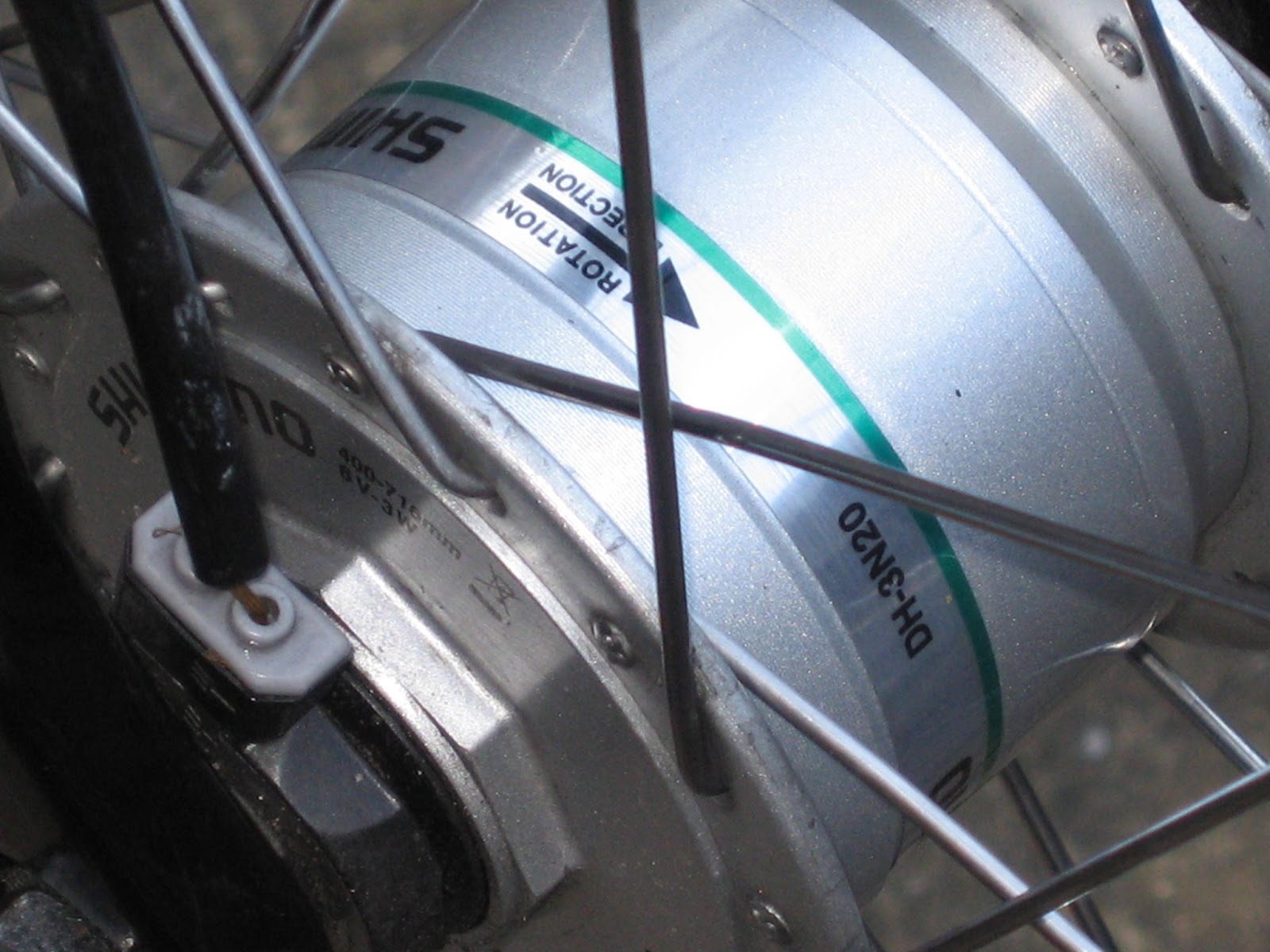
         Dynamo lighting – rare here, but fairly common on European bikes: the dynamo for powering the light is either in the front hub or, especially on older, Dutch bikes, at the side of the front wheel, in the shape of a bottle. Most bikes here, if they have a light at all, still have a battery powered torch strapped to the handlebars.


 Chainguard or chaincase and mudguards (fenders) Typically these bikes are meant to be ridden in your everyday clothes. Something that prevents you getting oil and grease on your trousers from the chain and water/mud from puddles etc is a must therefore. Chainguards and mudguards are quite common, whilst chaincases which completely cover the chain are quite rare, here.


Wheel locks: useful if you leave the bike outside a shop for short periods. Also adds an additional layer of security to the more common types of lock.


  Kickstand – much better than leaving the bike against something, I think; I prefer a double kickstand which is what I have on my bike.


Upright riding position with swept back handlebars - more convenient for short trips, but a matter of personal preference.


And last, but not least...bells! Using a lot of cycle paths, these enhance safety and are polite when using shared foot/cycle paths. 


All this equipment does add a fair bit of weight - my Kettler weighs over 20 kilos, and typically a Dutch town bike will weigh around this. It also adds to the cost - people wonder why these types of bikes cost what they do - over £500 and not uncommonly £200+ more. It's also why to some they look strange...

Sunday, 17 February 2013

Intro - What This Blog Is About:


So, I’ve got round to writing the thing after having told a few people (eh Mick?) for over a year that I was going to write it.

Welcome to my blog: Town Bike Mark, a cycling blog covering utility/town/city/commuting cycling. I suppose you could also call it urban cycling, if you like. Occasionally it’ll feature long distance touring too – as and when I get round to it. The type of bikes and cycling that seems to be a bit rare in these parts – North Hampshire (as opposed to say, London) where everybody seems to be on a mountain bike, so, no different to the rest of the country really. There will also be random thoughts, musings and observations on non-cycling related topics as and when I think of them simply because I thought it would be a good idea to share them with you.

Frequently, talking about cycling involves mentioning fitness and environmental benefits, but I’m not really interested writing about these, although I’m glad that they’re there  – I just like riding the thing – usually quite slowly;  if I break 10 miles per hour, I’m probably riding downhill.

As I said, the main subject will be utility/town/city cycling - think bikes for modified to carry stuff, eg a rack on the back, baskets and lights for actual utility, not sports, typically some call them “Dutch” bikes. Also, everything associated with this in the way of accessories eg luggage, tools and nifty bits and bobs as and when I come across them.